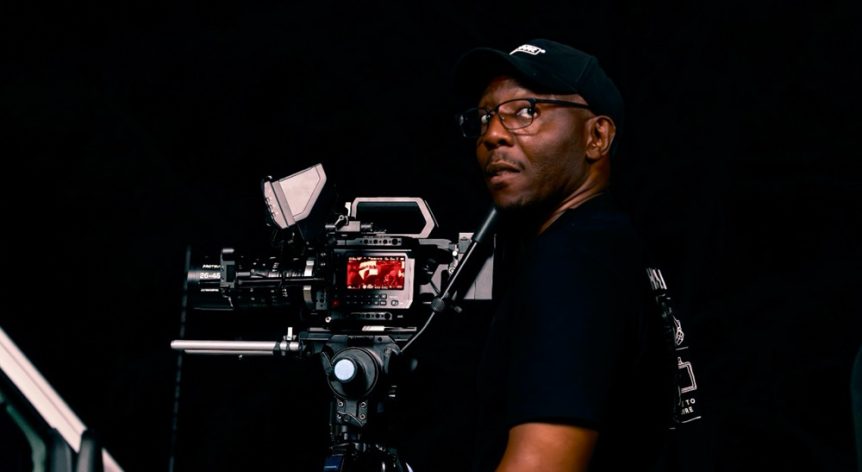
Matching sensor with two body styles helped streamline production.
Fremont, CA, USA - Blackmagic Design today announced that the independent feature film “Not So Bright” completed principal photography using the Blackmagic URSA Cine 12K LF and the Blackmagic PYXIS 12K digital film cameras and has commenced post production using DaVinci Resolve Studio editing, grading, visual effects (VFX) and audio post production software.
A dark comedy in the voice of nostalgic, ‘90s teen classics, “Not So Bright” follows two brothers with a knack for bad decisions who embark on a hilariously chaotic journey filled with misadventures, absurd twists and unpredictable outcomes while pursuing their lifelong dream of making it to Comic Con. The film was written and produced by Choice Skinner, Dylan Fincher and Willis Fincher and directed and photographed by Skinner.
On the PYXIS 12K Skinner noted, “As an indie filmmaker who writes, directs and produces, I see the advantages of having a compact camera with the same amazing sensor as the URSA Cine 12K LF. The key for me is to have a film that is comparable in look and quality to some of the top films on the market but not have to struggle financially to get the film off the ground. At the outset of production, we were able to get our hands on the URSA Cine 12K LF, which was a dream in itself, so we shot the first half of our film with it.”

“The URSA Cine 12K laid the foundation, and the PYXIS 12K moved us over the finish line during principal photography,” added Skinner. “It all worked out perfectly because many of the remaining setups were action sequences which incorporated tight spaces and lots of movement. We wanted the image quality to match but needed a much smaller unit. The PYXIS 12K made those situations a walk in the park.”
Skinner and his team used an Openmoon saddlebag and a SmallRig shoulder kit which, when combined with the small footprint of the PYXIS 12K, allowed for shooting in spaces a larger camera like the URSA Cine 12K LF would not fit.
“In truth, both cameras complement each other, and either could fit the role of A camera on any set. But having a compact version of the same sensor was, in many ways, a life saver. What other camera manufacturer offers two sizes of the same sensor,” Skinner noted.
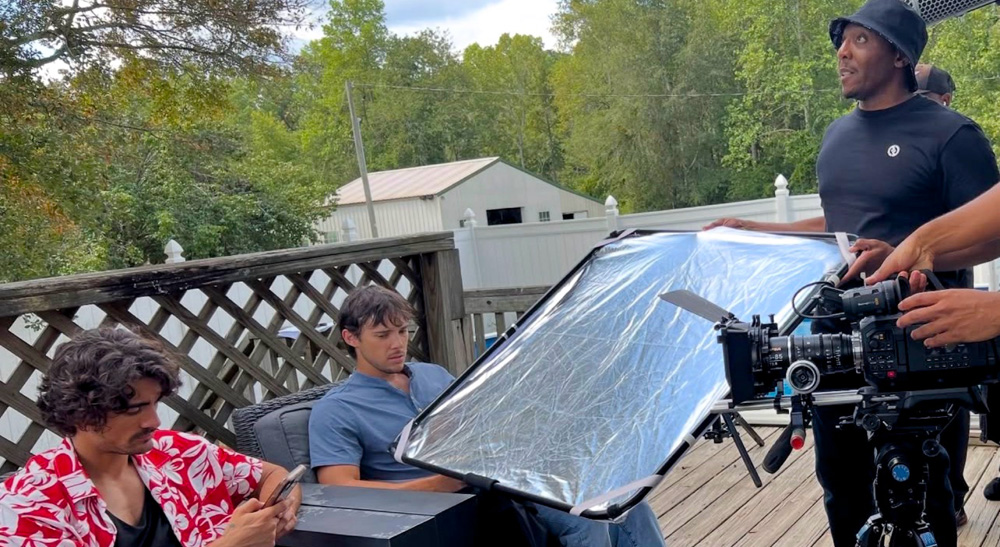
Skinner’s style, similar to comedies of the ‘80s and ‘90s, focuses on casting and performances, while relying on the camera to capture a quality image despite not using fancy rigs or a lot of motion.
“Because I'm an acting coach, I am very big on casting talented actors and allowing their performance to pull the audience in,” added Skinner. “I'm drawn to using a tripod and following movement with it rather than forcing the camera itself to move. I only move the camera if it's absolutely psychologically and emotionally necessary. In crafting my shot list for ‘Not So Bright,’ I knew I would have to rely on the blocking, but I also chose to shoot in anamorphic aspect ratio using Laowa lenses. The large sensor on both the PYXIS 12K and the URSA Cine 12K LF allowed me to capture an amazing, wide image while still having control over depth in each shot.”
Just entering post production, Skinner is cutting in DaVinci Resolve Studio and is already pleased with the image quality from both cameras. “I'm actually editing 9K Blackmagic RAW files on a computer system that is over seven years old,” Skinner said. “The footage from the sensor is amazing. Out of camera and without color correction or color pass, you instantly know the footage is in another league. I now have a low budget film that rivals most high level budget films. That was my intention. Mission accomplished.”